Yerba Mate, Tea, or Coffee? A Guide to Choosing Your Daily Drink
- Anthony Penna
- May 22
- 8 min read


Walk into any café, kitchen, or office break room and you'll find people clutching their beverage of choice like a small daily ritual. For most of the world, that drink is coffee or tea. For a passionate and growing community, it's yerba mate. All three come from plants, all three contain caffeine, and all three have devoted fans willing to make strong arguments on their behalf.
But they are not interchangeable. Each has a distinct character a unique flavor, a different kind of energy, a cultural story behind it. Knowing how they differ can help you find the one that actually suits your life, not just your morning alarm.
Where They Come From
Yerba mate originates in the subtropical forests of South America. The Guaraní people have been drinking it for centuries, preparing it from the dried leaves and stems of Ilex paraguariensis a relative of the common holly plant. Long before it became a wellness trend in other parts of the world, mate was (and remains) a social institution in Argentina, Uruguay, Paraguay, and southern Brazil. Sharing a gourd of mate with someone is an act of hospitality and trust; refusing it can be a mild social faux pas.
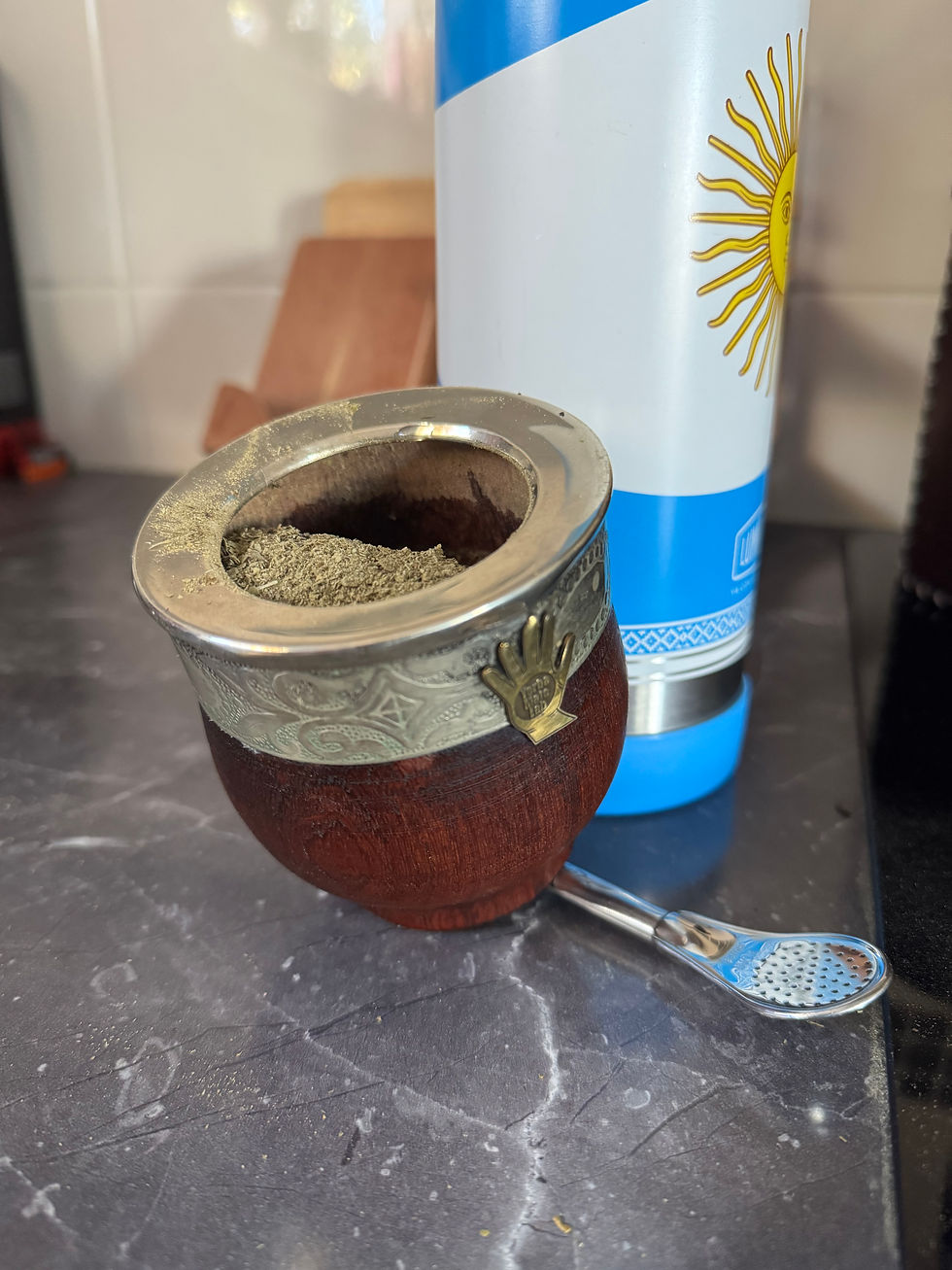
Fun fact: Yerba mate is the national drink of Argentina and Argentinians drink more of it per capita than they do coffee or tea.
Tea has the longest history of the three. It was first consumed in China roughly 4,000 years ago, and the story of its discovery. A leaf falling into a cup of hot water while an emperor rested and has the feel of a parable about simplicity. From China, tea culture spread through Japan, Korea, India, and eventually the rest of the world, adapting at every stop. The British afternoon tea, the Japanese tea ceremony, and the chai stalls of Mumbai are all expressions of the same plant, Camellia sinensis, filtered through wildly different cultures.

Fun fact: All tea green, black, white, and oolong they all come from the same plant. The difference is purely in how the leaves are processed after picking.
Coffee was born in Ethiopia, where, according to legend, a goat herder named Kaldi noticed his flock becoming unusually spirited after eating red berries from a certain tree. Whether or not Kaldi existed, coffee cultivation took root in Yemen by the 15th century, spread through the Arab world via coffeehouses called qahveh khaneh, and arrived in Europe by the 17th century. Today, two species dominate the market: Coffea arabica, prized for its nuanced flavor, and Coffea canephora (robusta), which is bolder, cheaper, and higher in caffeine.

Fun fact: Coffee is the second most traded commodity in the world, after oil.
How They're Prepared
The preparation of each drink reflects its cultural roots.
Yerba mate is traditionally made in a calabsh gourd, wooden, metal or glass gourd and is sipped through a bombilla, which is a metal straw with a built-in filter that keeps the loose leaf particles out of your mouth. Hot water (not boiling and ideally around 70–80°C) is poured over the leaves repeatedly, often with a group of friends or family sharing the same gourd, each person drinking it fully before passing it along. Modern drinkers sometimes use French presses or teabags for convenience, but purists consider this a compromise.

Tea preparation ranges from elegantly simple to genuinely complex:
Green tea steeps for just 60–90 seconds at around 75°C — too hot and it turns bitter
Black tea handles a full 3–5 minutes at boiling point
Oolong teas are often brewed multiple times in tiny vessels, each infusion revealing a slightly different expression of the same leaf
White tea is the most delicate — low heat, brief steeping, barely any intervention
The point of all this variation is that tea rewards attention. The same leaves can taste completely different depending on how you treat them

Coffee brewing involves an almost absurd number of variables: grind size, water temperature, extraction time, pressure, and the roast level of the bean all affect the final cup. Methods range from the humble drip machine to the precise ritual of a pour-over or the pressurized intensity of an espresso machine. Unlike tea and mate, coffee requires transforming the raw ingredient and roasting fundamentally changes the chemical composition of the bean, developing hundreds of aromatic compounds in the process.

Caffeine and How It Hits You
All three drinks stimulate the central nervous system, but they do it differently — and that difference matters more than most people realise.

Coffee delivers the strongest and most immediate hit. For many people, it's efficient, fast-acting and effective. The downside is the familiar crash that can follow, along with potential jitteriness or anxiety in caffeine-sensitive individuals.
Tea contains L-theanine, an amino acid that promotes calm alertness by modulating how caffeine affects the brain. Research published in Nutritional Neuroscience found that the combination of L-theanine and caffeine significantly improved accuracy, alertness, and reduced tiredness in study participants without the edginess that caffeine alone can produce. [1]
Yerba mate has a distinctive stimulant profile thanks to two additional compounds:
Theobromine (also found in chocolate) — a milder, longer-lasting stimulant that acts mainly on smooth muscle rather than the central nervous system
Theophylline (found in small amounts in tea) — a bronchodilator that improves airflow
Together, these produce what mate drinkers often describe as "clean" energy — alert and motivated, without the sharp spike and crash of coffee. This is partly why mate became popular with athletes. One study published in Nutrition & Metabolism found that participants who consumed yerba mate before moderate exercise burned 24% more fat compared to a placebo group. [2]
Worth knowing: Drinking mate at very high temperatures over many years has been associated with increased esophageal cancer risk in some studies. Most researchers believe this is related to the heat rather than the mate itself, so let it cool a little before sipping.
What They Taste Like
Flavor is ultimately personal, but here's a rough map of the territory.
Coffee has the widest range in its class:
Light roasts — bracingly acidic, with notes of citrus, stone fruit, or jasmine
Medium roasts — chocolate, caramel, and nuts; the crowd-pleaser
Medium-dark roasts — richer and fuller-bodied than medium, with bittersweet chocolate, toasted nuts, and a slight roasty edge; less acidity but still enough complexity to keep things interesting
Dark roasts — bold, bitter, and smoky; what most people picture when they think "coffee"
Origin matters too: Ethiopian coffees tend to taste fruity and floral, Colombian coffees are reliably balanced, and Sumatran coffees lean earthy and full-bodied

Tea arguably has the widest total variety of any drink in the world:
White tea — subtle, slightly sweet, barely there
Green tea — ranges from the grassy freshness of Japanese sencha to the umami depth of gyokuro
Oolong — simultaneously floral and roasted; endlessly interesting
Black tea — malty, fruity, or smoky depending on origin

Yerba mate tends to polarise newcomers. At its most basic, it's earthy and vegetal and somewhat grassy, with a bitter edge and a lingering smokiness. Quality and preparation matter significantly, however: a well-sourced mate brewed at the right temperature is considerably more approachable than a cheap brand steeped too hot. Flavored varieties blended with mint, citrus, or herbs can make it a much easier entry point.

Fun fact: Some yerba mate enthusiasts claim the drink tastes different depending on who pours it. It is a belief so culturally ingrained that in Uruguay, people carry their gourd and thermos everywhere they go, all day long.
Health Benefits: What the Research Says
All three drinks contain antioxidants and have been linked to health benefits in scientific literature though it's worth remembering that most evidence comes from observational studies, not clinical trials.
Coffee
Type 2 diabetes: A Harvard study tracking nearly 124,000 people over 16–20 years found that those who increased their coffee intake by more than one cup a day had an 11% lower risk of developing type 2 diabetes [3]
Parkinson's disease: A meta-analysis of nine prospective cohort studies found higher caffeine intake was associated with a 39% reduced risk in men and 29% in women [4]
Liver health: Regular coffee drinkers are significantly more likely to have liver enzyme levels within a healthy range [5]
Potential downsides: Can worsen anxiety, disrupt sleep if consumed late in the day, and cause digestive discomfort in some people
Tea
Heart health: A study of 40,530 Japanese adults found that those who drank more than five cups of green tea a day had a 26% lower risk of death from heart attack or stroke compared to those who drank less than one cup [6]
Cholesterol: A meta-analysis of 14 clinical trials found that green tea significantly lowered LDL cholesterol and triglyceride levels [6]
Gut health: Black tea has been associated with improved gut microbiome diversity
Potential downsides: Tannins in tea can reduce iron absorption from plant-based foods worth noting for vegetarians. Oversteeping makes it bitter and increases tannin content
Yerba Mate
Antioxidants: Yerba mate contains chlorogenic acid, caffeic acid, and flavonoids like rutin and quercetin are the same types of antioxidants found in green tea and berries [2]
Cholesterol: A 2019 clinical study found that consuming yerba mate daily led to significant reductions in LDL cholesterol and triglyceride levels over 12 weeks [7]
Physical performance: Research suggests it may support endurance and fat oxidation during exercise [2]
Potential downsides: High-temperature consumption over long periods may increase esophageal cancer risk; more research is still needed on many claimed benefits
None of the three is a miracle cure. All three can comfortably be part of a healthy lifestyle in moderate amounts.
Which One Is for You?
Choose coffee if you:
Need a reliable, fast-acting energy boost
Enjoy bold, complex flavors and experimenting with brewing methods
Don't mind a bit of an afternoon slump
Function well with higher caffeine levels
Choose tea if you:
Prefer variety and like switching things up depending on your mood
Are caffeine-sensitive but still want a gentle lift
Want something you can drink any time of day, including evenings (herbal teas aside)
Enjoy a calm, focused kind of alertness over a wired one
Choose yerba mate if you:
Want sustained energy over a long period without a crash
Are drawn to ritual and enjoy a more hands-on preparation
Are active or athletic and looking for a natural pre-workout option
Simply want to try something different and ideally shared with someone who already drinks it

And if you can't decide, there's nothing stopping you from keeping all three around.
Whichever drink you choose, the best one is the one you actually enjoy, not the one with the most antioxidants.
Written by Anthony Penna, Yerba Notes
Sources
Giesbrecht, T. et al. (2010). "The combination of L-theanine and caffeine improves cognitive performance and increases subjective alertness." Nutritional Neuroscience, 13(6). https://www.tandfonline.com/doi/abs/10.1179/147683010X12611460764840
Healthline. "7 Health Benefits of Yerba Mate (Backed by Science)." https://www.healthline.com/nutrition/8-benefits-of-yerba-mate
Rush University Medical Center. "Health Benefits of Coffee." https://www.rush.edu/news/health-benefits-coffee
Linus Pauling Institute, Oregon State University. "Coffee." https://lpi.oregonstate.edu/mic/food-beverages/coffee
Johns Hopkins Medicine. "9 Reasons Why (the Right Amount of) Coffee Is Good for You." https://www.hopkinsmedicine.org/health/wellness-and-prevention/9-reasons-why-the-right-amount-of-coffee-is-good-for-you
Harvard Health Publishing. "Green tea may lower heart disease risk." https://www.health.harvard.edu/heart-health/green-tea-may-lower-heart-disease-risk
Sterling Medical Center. "The Science Behind Yerba Mate: How It Supports Metabolism and Overall Wellness." https://www.sterlingmedicalcenter.org/opinions/yerba-mate-benefits/
YBTCO. "Caffeine 101: Coffee vs. Tea vs. Yerba Mate (The Energy Chart)."
Horsham Coffee Roaster "Ethiopian Coffee Ceremony."
Food Network "This Is Why Your Tongue Feels Like Sandpaper When You Drink Tea."
The Basic Barista "What Water Temperature To Brew Pour Over Coffee?"
https://cdn.shopify.com/s/files/1/0398/5450/6029/files/Espresso_Shot_Pouring.webp?v=1745993500
Just Fresh Roasted "Coffee roasting styles - light medium or dark."
Dreamtime

Comments